From Surveys to Strategy: Making Wellbeing Data Work
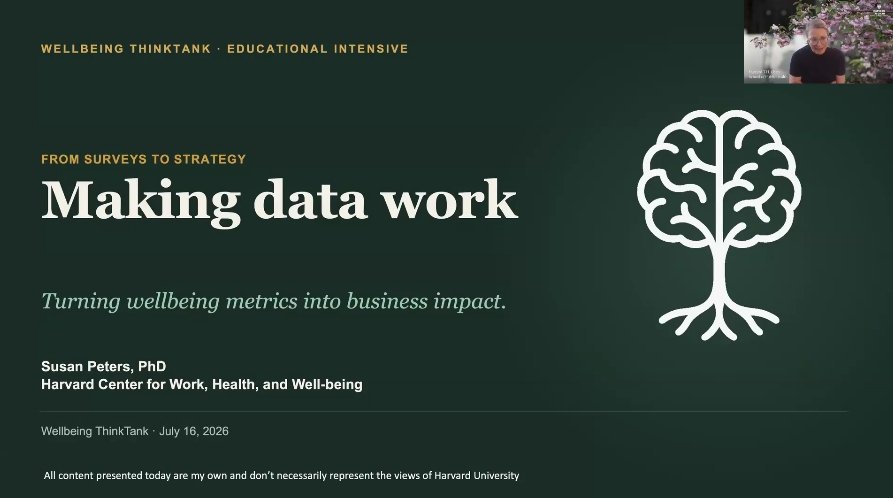
At a recent Wellbeing Think Tank Educational Intensive, Susan Elizabeth Peters, PhD, explored a question many organizations overlook:
What happens after employees complete a workplace survey?
Rather than focusing on collecting more data, the session challenged participants to think more strategically about how employee feedback can inform meaningful decisions and improve the way work is designed.
The Survey Isn't the Goal
Many organizations invest significant time asking employees for feedback, yet participants reflected on a common challenge: too often, surveys end with a report instead of meaningful action.
Dr. Peters encouraged attendees to view surveys as the beginning of a conversation, not the end of one. The value of employee listening comes from using what is learned to guide thoughtful decisions and strengthen the workplace over time.
Start with the Decision, Not the Question
One of the strongest ideas from the session was that organizations should first consider what decisions they hope to make before selecting a survey or writing questions.
When leaders begin with a clear purpose, they are better positioned to collect information that supports meaningful action rather than simply generating more data.
This shift also encourages organizations to focus on workplace conditions they can influence, helping move conversations beyond identifying problems toward improving the work itself.
Listening Is Only the First Step
Another important discussion centered on trust.
Employees are often willing to share honest feedback, but that trust can erode when they never learn what happened after the survey or see little evidence that their input influenced decisions.
Participants explored how closing the feedback loop through communication, transparency, and visible action helps strengthen future participation while reinforcing that employee voices matter.
Community Reflections
Throughout the session, participants reflected on the challenges of moving from data collection to meaningful organizational change.
The discussion explored how organizations can balance scientific rigor with practical realities, including selecting measures that fit their goals, interpreting results responsibly, and using employee feedback to inform decisions. These conversations reinforced that collecting data is only one part of employee listening. Equally important is how organizations respond to what they learn.
From Insight to Action
Before launching your next employee survey, pause and ask:
What decision do we hope this information will help us make?
Starting with that answer can help create surveys that are more purposeful, more actionable, and more valuable for both leaders and employees.
Continuing the Conversation
Members with Professional and Practitioner access can download the Workplace Wellbeing Survey Starter Guide and Workplace Wellbeing Survey Design and Questions in the community portal. These member only resources are designed to help leaders clarify survey goals, choose better questions, protect employee trust, and connect feedback to meaningful action.
Professional and Practitioner members can also watch the full Educational Intensive on demand through the community portal, including Dr. Peters’ frameworks, examples, and audience discussion. Learn more about membership options here.
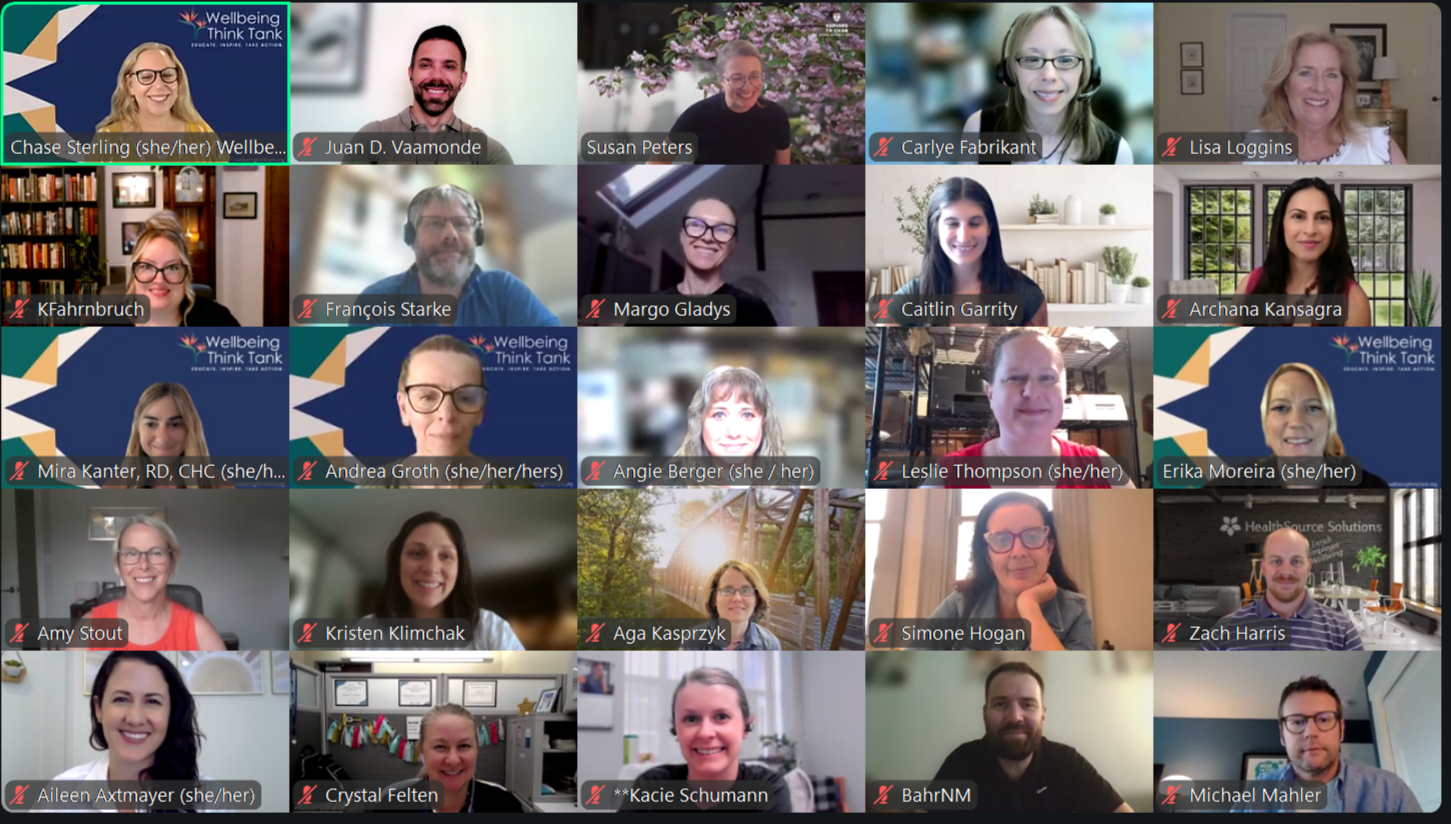
A snapshot of some of our Community Members attending the session with Dr. Peters
Wellbeing Think Tank brings together people who care deeply about creating healthier, more human workplaces. Learn how to join our community and stay connected to evidence-based learning and events throughout the year.
If you believe accessible, trusted resources should continue to be available to all, consider making a tax-deductible donation. Your support helps us continue to offer education you can trust, inspiration that you need, and resources so you can take action for wellbeing.
